← Back to Article Listing

What is Workflow Diagnostics

This 6 part series discusses why every organization runs on workflows, yet few leaders can clearly explain how work actually moves from start to finish. This series examines the common sources of operational friction, from unnecessary approvals and disconnected systems to bottlenecks hidden between departments. Through practical examples and diagnostic techniques, you'll learn how to make workflows visible, identify inefficiencies, and create sustainable improvements that help teams work faster, smarter, and with less frustration.

Series 6 parts
Stop Buying Software Before You Understand the Work
Article Part 1
Stop Buying Software Before You Understand the Work

Stop Buying Software Before You Understand the Work

Part 1

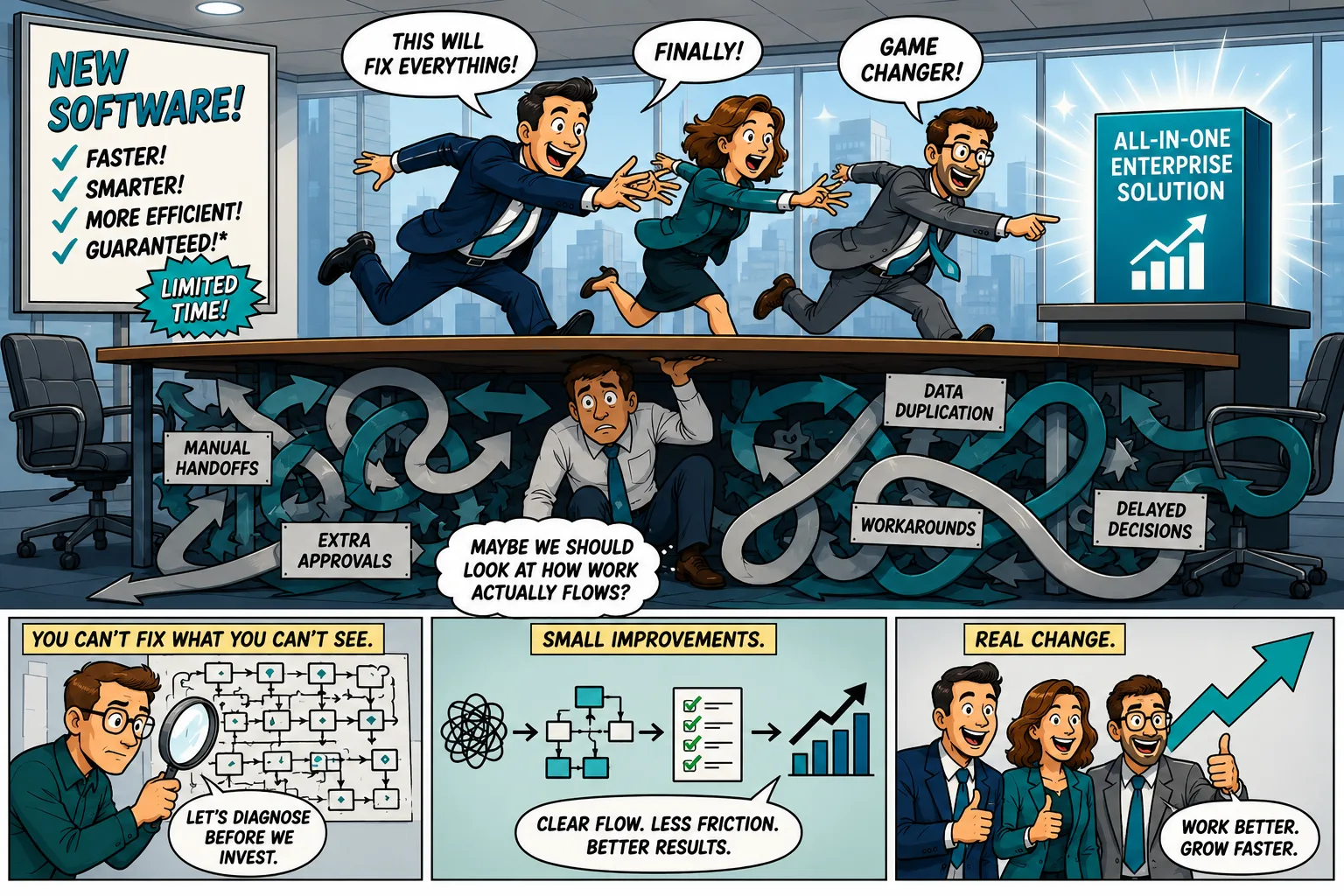
This entry is part 1 of 6 in the series What is Workflow DiagnosticsOrganizations often buy software before they understand how work actually moves. This post explains why that creates expensive disappointment and how to check whether the issue is technical or structural. Readers get a simple pre-software workflow review they can use immediately.

The Hidden Tax of Small Workflow Friction
Article Part 2
The Hidden Tax of Small Workflow Friction

The Hidden Tax of Small Workflow Friction

Part 2

This entry is part 2 of 6 in the series What is Workflow DiagnosticsThis post turns small workflow delays into visible business costs. It shows how extra approvals, handoffs, and manual work quietly accumulate into lost capacity. Readers get a simple friction calculator and a practical audit they can run on one workflow.

Handoffs Are Where Work Goes to Nap
Article Part 3
Handoffs Are Where Work Goes to Nap

Handoffs Are Where Work Goes to Nap

Part 3

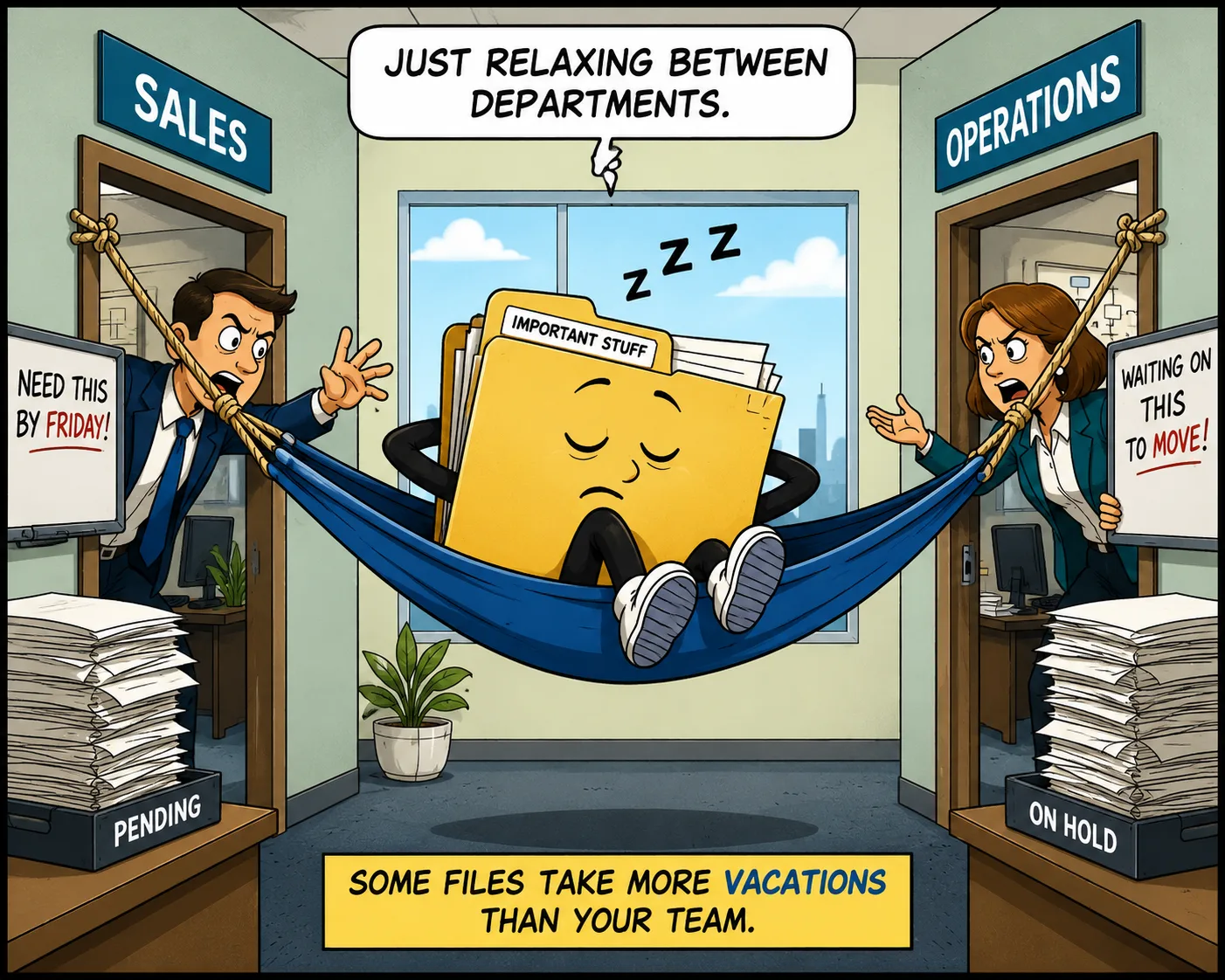
This entry is part 3 of 6 in the series What is Workflow DiagnosticsTeam transitions are a major source of workflow delay. This post explains how unclear handoffs create waiting, rework, and follow-up loops. Readers get a simple handoff test and checklist to make ownership and readiness clearer.

Approvals Should Protect Value, Not Worship the Button
Article Part 4
Approvals Should Protect Value, Not Worship the Button

Approvals Should Protect Value, Not Worship the Button

Part 4

This entry is part 4 of 6 in the series What is Workflow DiagnosticsApproval steps should protect value, not simply slow work down. This post helps leaders distinguish useful controls from ceremonial rubber stamps. Readers get an approval scoring test and a safer way to reduce approval bloat.

Workarounds Are Employee Feedback in Disguise
Article Part 5
Workarounds Are Employee Feedback in Disguise

Workarounds Are Employee Feedback in Disguise

Part 5

This entry is part 5 of 6 in the series What is Workflow DiagnosticsWorkarounds are often practical signals that the official workflow is failing. This post reframes employee-created shortcuts as diagnostic evidence. Readers get interview questions and a simple adopt, fix, or retire decision model.

Start Small: The One-Workflow Diagnostic
Article Part 6
Start Small: The One-Workflow Diagnostic

Start Small: The One-Workflow Diagnostic

Part 6

This entry is part 6 of 6 in the series What is Workflow DiagnosticsThe best workflow diagnostic often starts with one process, not an enterprise-wide program. This post gives leaders a manageable way to choose, map, and prioritize a single workflow. Readers get a clear six-step diagnostic structure they can use this week.

Have Questions? Click Here
✕

What Question Do You Have?

Send us a message and we will reply soon.

Please submit your message in English. Services are provided in English only.