
The Power of Neutrality: Why We Don’t Sell Software
The traditional consulting model often ends with a recommendation to purchase a specific software platform, a conflict of interest that serves the vendor first. We specialize in research, analysis, and strategic options only. Our focus is exclusively on diagnosing your process bottlenecks and delivering the optimal, unbiased solution for your business.
A quick comparison
| Feature | Digital Efficiency Consulting Group (DECG) | Typical Systems Integrator / Big Consulting |
|---|---|---|
| Primary Goal | Objective Process Diagnosis & Strategic Recommendation (The Blueprint) | Software Implementation & Ongoing Licensing/Services |
| Output | Decision-Ready Action Plan with Quantified ROI | Proposal for a Specific Technology Stack |
| Business Model | Project-Based Fee for Research & Advisory | Project Fee + Potential Software Reseller Commissions |
| Implementation | You Control & Implement (Optional Advisory Support) | Required or Preferred Vendor Relationship |
If you decide to pursue software, you’ll do it with clear requirements, quantified ROI targets, and total cost control, based on the Blueprint, not a sales agenda.
You Own the Solution.
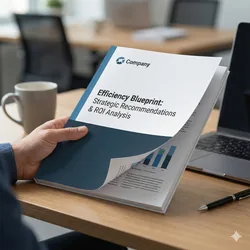
You Control the Budget. Our only deliverable is the Efficiency Blueprint. We ensure you have the data and strategic path to choose the right implementation partner and tools, on your timeline, with total cost control.
If you want, we can also stay involved in a vendor-neutral capacity, reviewing proposals and validating scope, so you avoid over-engineered, costly solutions.



Neutrality that turns facts into repeatable results.
We don’t take sides. We build the system that makes sides less interesting. We don’t show up to validate a department, a vendor, or the loudest person in the room. We document what’s real, agree on what “better” means, and let the data settle the argument so the team can build a stronger process together.
From Facts to Repeatable Results
-
1 All solutions on the tableBig, small, manual, automated, cheap, expensive. We surface options and tradeoffs, not winners.
-
2 Foundation & scoreboardWe define what “better” means and how to measure it. Everyone agrees on the scoreboard before the game starts.
-
3 Reality-testingWe map what actually happens and measure it. Ideas must survive contact with real workflow data.
-
4 Process = truthWhen the workflow is visible, the debate moves from “who said what” to “what the system shows.”
-
5 Process selects toolsThe workflow defines A, B, and C. We pick the tool that reliably delivers A, B, and C with the least complexity.
-
6 Implement & repeatWe implement the least-biased path, verify results with data, and strengthen the process so it repeats without babysitting.
Hover (or tap) each step to see how neutrality becomes repeatable results.
What neutrality means here.
These answers explain how we stay unbiased, how tools get selected, and what happens when “do nothing” is the right call.
What makes DECG different from other consulting firms?
Here are five core differences:
- Insight-first, not slide-first: practical findings and decision-ready options.
- No implementation agenda: I’m not selling software or trying to take over your operations (see Neutrality).
- Right-sized engagements: scoped to deliver meaningful clarity quickly.
- Reality-based analysis: we map what actually happens, including exceptions and workarounds.
- Client control: you control timing, tools, budget, and what gets implemented.
In short: We optimize for efficiency and outcomes, not billable time. If you want the process in one place, see the Roadmap.
Do you push software or specific vendors?
No. DECG does not sell software, receive vendor kickbacks, or design projects to steer you into a purchase. If a tool helps, we will say so. If it doesn’t, we will say that too.
This is core to how we work. The details are spelled out on the Neutrality page.
Do you recommend software at all?
Sometimes, yes, but only when it’s truly the simplest way to remove friction or reduce risk. A lot of problems are process issues wearing a “we need software” costume.
When software is part of the answer, we will define requirements first, compare options objectively, and keep you in control of the decision. That approach is outlined on Neutrality and baked into the Roadmap.
Do we need to buy new software to fix workflow problems?
Usually not. In many cases the issues uncovered during a workflow diagnostic are related to how a process is designed rather than limitations in the technology itself.
Often the most effective improvements involve adjusting the workflow, removing unnecessary steps, reducing handoffs, or making better use of the tools already in place.
However, there are situations where a system, tool, or resource simply cannot support the level of complexity the workflow requires. When that happens, DECG evaluates the situation from multiple angles. One option may be simplifying or restructuring the process so the existing system can support it without requiring new software. Another option may involve introducing a new tool or system if the business needs truly require that additional capability.
If a new system becomes part of the recommended path, a separate Statement of Work (SOW) is created to define the discovery process. During that phase we identify the operational requirements, budget constraints, regulatory considerations, and security requirements involved. From there, potential solutions are evaluated against those criteria.
DECG does not promote specific vendors or software platforms. The workflow and operational requirements determine what solutions are appropriate. Our role is to present options that meet the client’s needs so the organization can make an informed decision based on facts rather than vendor preferences.
Can you help us talk to vendors without becoming the implementer?
Yes. We can help you translate your needs into clear requirements, run structured vendor conversations, and pressure-test proposals so you’re not buying a shiny tool that doesn’t fit your workflows.
But we don’t become your implementation team. we help you choose wisely and set you up for success. That boundary is part of our Neutrality approach and shows up in the Services models.