PROCESS OVERVIEW

How the DECG Efficiency Blueprint Is Built

Most operational problems look like people problems or effort problems. They are usually neither. They are process problems — and the friction is already costing time, margin, and capacity before anyone puts a name to it. DECG does not jump straight to recommendations. The process begins with workflow diagnostics to understand how work actually moves through an organization. From there, DECG identifies operational bottlenecks and workflow friction, classifies the type of process drag involved, and applies structured problem solving to generate improvements that can be prioritized into a practical operational roadmap.

1
FLOW
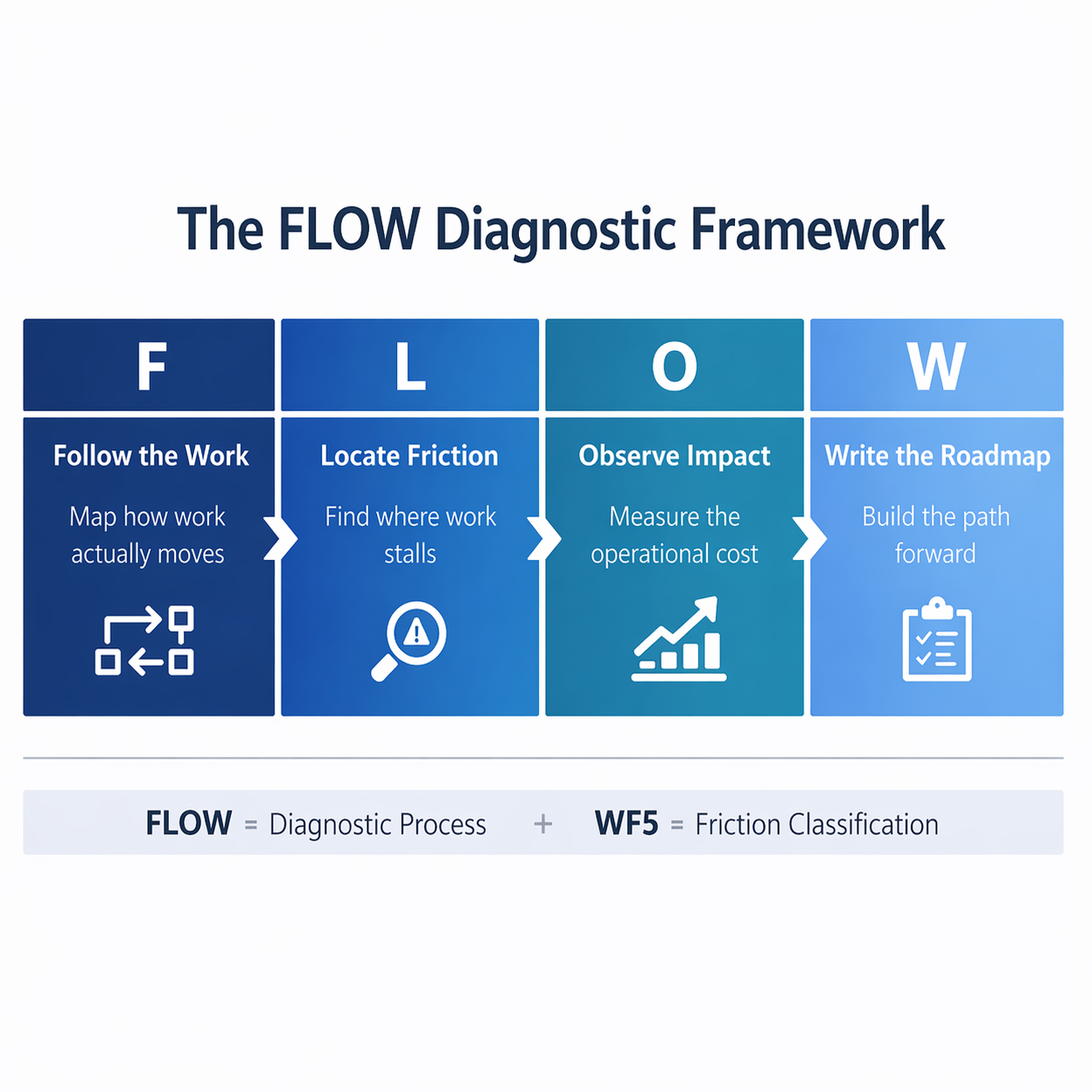
Follow the work, locate friction, observe impact, and prepare the diagnostic path forward.
2
WF5
Classify each friction point so the problem is named correctly instead of treated like generic operational chaos.
3
CPS
Use Creative Problem Solving to turn diagnosed friction into workable improvements and a decision-ready roadmap.
Process overview diagram A consulting style diagram showing FLOW feeding into WF5, then into CPS, and then into the Efficiency Blueprint. FLOW Diagnostic Process WF5 Friction Classification CPS Solution Design Efficiency Blueprint Prioritized improvements + execution roadmap Find friction Classify drag Core sequence: FLOW → WF5 → CPS → Efficiency Blueprint Locate friction Name friction Solve friction
THE THREE-PART METHOD

How Each Part Feeds the Next

The three frameworks are not interchangeable and they are not optional — each one does a specific job the others cannot. Skip FLOW and you are solving the wrong problem. Skip WF5 and your solutions are aimed at symptoms. Skip CPS and you have a diagnosis with no plan. Together they produce something a gut-check recommendation never can: a defensible, evidence-based roadmap.

Layer 1

FLOW: Finds the Friction

FLOW is the diagnostic process. It follows how work actually moves, identifies where it slows, measures what the friction is costing, and builds the factual foundation for what needs attention.

FLOW Diagnostic Framework
  • Follow the Work — map how work really moves, not how the org chart says it should. These are often very different things.
  • Locate Friction — find where delays, bottlenecks, and breakdowns actually appear. The place everyone complains about is rarely where the problem starts.
  • Observe Impact — quantify what the friction is costing in time, rework, capacity, or margin. Gut feelings do not make it into the roadmap. Evidence does.
  • Write the Roadmap — build the draft structure for what needs attention, in what order, and why.
Layer 2

WF5: Explains the Friction

Once friction is found, WF5 classifies it. This keeps the team from treating everything like one giant blob of dysfunction, which is very popular in meetings and rarely helpful.

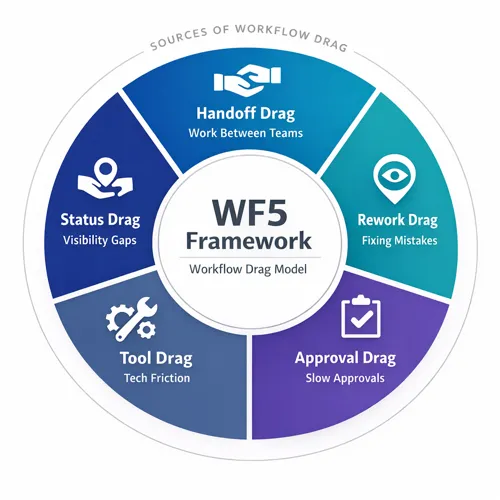
WF5 - Workflow 5 step Framework
  • Handoff Drag — work that breaks between teams. The order was entered correctly. Then it hit the next department.
  • Rework Drag — effort spent correcting mistakes that should not have happened. The labor is real. The output is zero.
  • Approval Drag — decisions that queue up while the work waits. Productivity stalls waiting for a signature that takes three days.
  • Tool Drag — system or technology friction that creates manual workarounds. If the team has a spreadsheet to fix the software, that is Tool Drag.
  • Status Drag — visibility gaps that slow action. Nobody knows where the order is, so three people go find out separately.
Layer 3

CPS: Solves the Friction

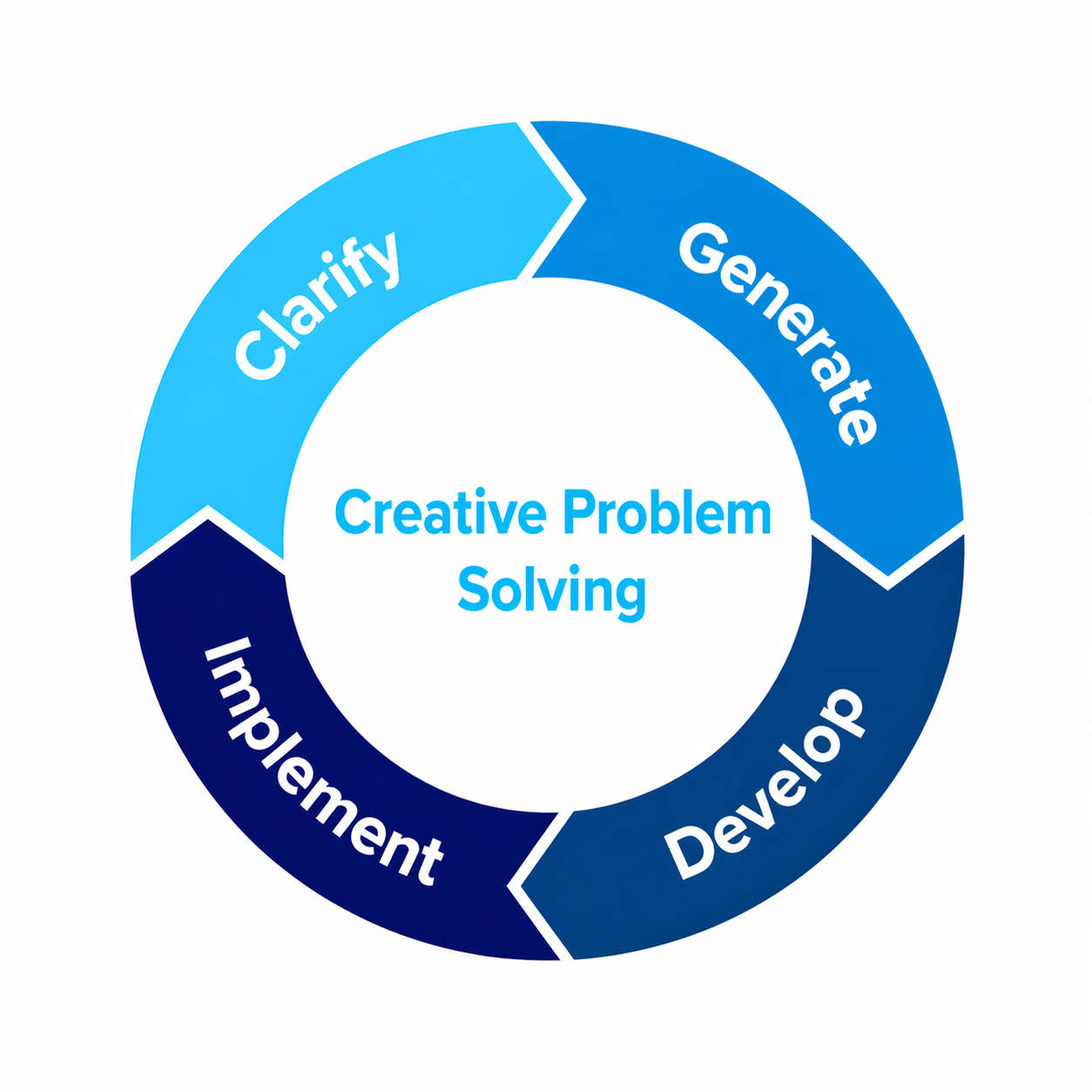
CPS becomes the thinking engine after the friction is identified and named. It is used to clarify the actual problem, generate options, develop the strongest path forward, and prepare changes that can be implemented.

CPS - Creative Problem Solving Framework
  • Clarify the real issue behind the friction. The stated problem and the actual problem are often not the same thing.
  • Generate possible ways to reduce or remove it. More than one option is required before any option is chosen.
  • Develop the best workable option — stress tested, not just promising on a whiteboard.
  • Implement the improvement in practice, with clear ownership and sequencing so it actually happens.
PROCESS FLOW

The Primary Direction of the Process

The process moves in one direction by design. Find friction before classifying it. Classify it before solving it. Solve it before building the roadmap. Skipping steps is how organizations end up with expensive solutions to the wrong problems.

Detailed process flow diagram A detailed diagram showing FLOW feeding into WF5, then CPS, then the Efficiency Blueprint, with smaller loop notations. FLOW Where work breaks WF5 Friction Type CPS Generate solutions Output Roadmap DECG Blueprint Available Solutions FLOW outputs Bottlenecks and friction points WF5 outputs 5 Drag Classifications CPS outputs Creative Problem Solving Efficiency Blueprint Prioritized improvements, sequencing, ownership, execution roadmap Results create new diagnostic signals

How the process actually behaves

The process is designed to move forward in a straight line. FLOW diagnoses where work breaks. WF5 classifies the type of friction involved. CPS develops solutions. Those solutions are then organized into the Efficiency Blueprint.

The loops exist inside the method, not around it. Diagnostics may tighten as new evidence appears, solutions may iterate as ideas are tested, and after improvements are implemented the results often reveal the next area of workflow drag.

  • FLOW may loop while diagnosing the true source of friction.
  • CPS may loop while refining the best practical solution.
  • Implementation feedback often triggers the next diagnostic cycle.
FLOW finds it. WF5 explains it. CPS solves it. The Efficiency Blueprint organizes the change.
START THE DIAGNOSTIC

What would this process reveal inside your workflows?

Every organization develops workflow friction over time. Handoffs slow down, approvals stack up, systems stop communicating clearly, and small inefficiencies quietly compound into lost productivity. The challenge is rarely effort — it is visibility.

The methodology above is built to fix that. DECG follows the work, names what is breaking, and builds a clear operational improvement plan your leadership team can evaluate and your internal teams can execute. No vague findings. No 90-day "transformation" that leaves your team guessing.

The output is the Efficiency Blueprint: a prioritized roadmap of practical improvements with sequencing, ownership, and logic your team can act on from day one.

Start by understanding where your workflows are creating unnecessary drag.

Schedule a Workflow Discussion

Have Questions? Click Here

What Question Do You Have?

Send us a message and we will reply soon.